Pakistan · #6 crop
Common wheat
Triticum aestivum · locally: gandum (گندم)
The foundation of Pakistani cooking – wheat from Punjab is baked into everyday chapati, roti and naan.
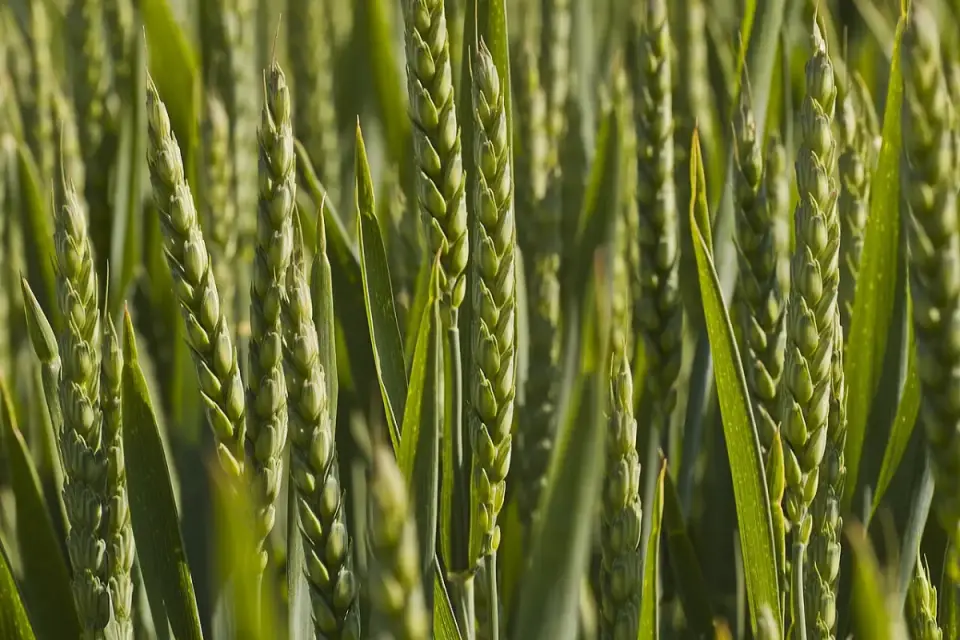
An annual cereal grass with a stem 60–150 cm tall topped by an ear made up of spikelets with 2–5 grains each. It is one of the world’s most important cereals, grown in temperate and subtropical climates; in South Asia it is sown in autumn and harvested in spring as a winter (rabi) crop. The grain contains gluten proteins, which make the flour suitable for baking bread. Semi-dwarf varieties introduced in the 1960s during the “Green Revolution” increased yields in the region many times over.
Significance in the country
Wheat is Pakistan’s most important crop and the country’s staple food, and Pakistan is one of the world’s leading producers of this cereal. In Punjab the April harvest coincides with the festival of Baisakhi, and the availability and price of flour (atta) are a constant topic of public debate.
Where it grows
Above all the canal-irrigated plain of Punjab, which produces about three-quarters of the national harvest, and Sindh; smaller areas in Khyber Pakhtunkhwa and Balochistan.
More: Wikipedia (en) Wikipedia (pl)