Nepal · #9 crop
Finger millet
Eleusine coracana · locally: kodo (कोदो)
A mountain cereal whose flour makes thick dhido, while its fermented grain becomes tongba beer, sipped through a bamboo straw.
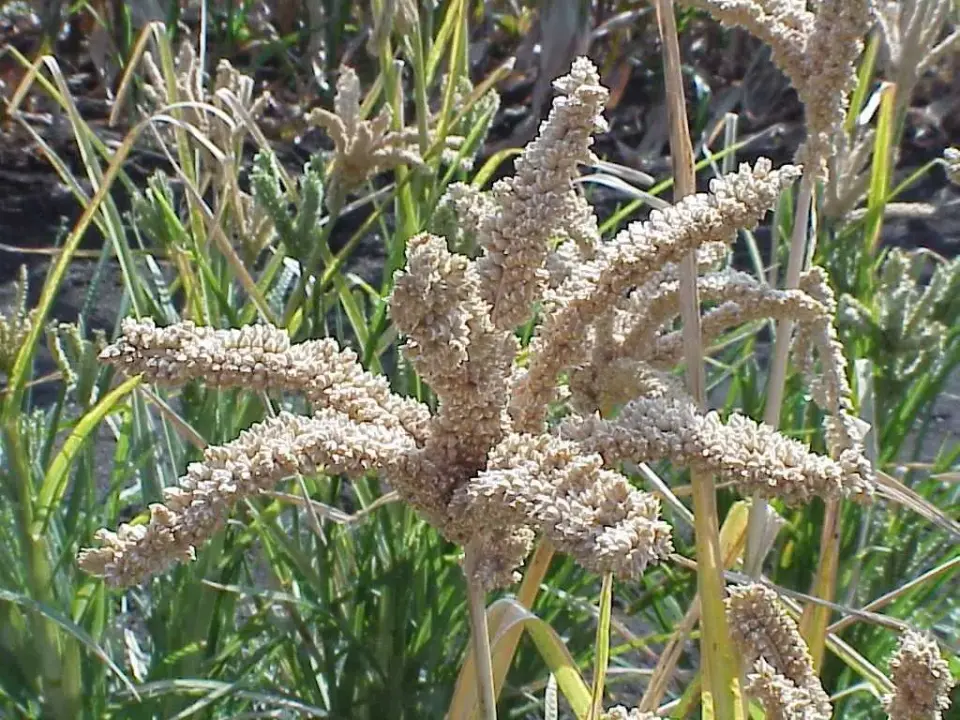
An annual cereal grass growing to 1–1.5 m, whose spikes spread out at the top of the stem like the fingers of a hand – hence the name “finger millet”. The small, reddish-brown grains are rich in calcium, iron and fibre, and when well dried can be stored for years without spoiling. The plant tolerates poor soils, drought and a cool climate, so it is grown where rice and wheat give poor yields. It originated in East Africa, from where it reached South Asia thousands of years ago.
Significance in the country
Kodo is the staple cereal of Nepal’s hill peoples – its flour is made into dhido and flatbreads, and the fermented grain into tongba beer and the spirit raksi, important in the rituals of the Limbu, Rai and other peoples. Seedlings are often transplanted between ripening maize on the same terraces.
Where it grows
Grown on terraces in the middle hills throughout the country, usually at about 500–2,500 m.
More: Wikipedia (en) Wikipedia (pl)