5 plants worth knowing
Nauru
Nauru is a tiny coral island of just 21 km², with a raised limestone plateau (Topside) ringed by a narrow, fertile coastal strip. For over a hundred years phosphate was strip-mined here, destroying the forest and soil on about 80% of the island – greenery has survived mainly on the coast and around Buada Lagoon, while on the plateau a landscape of limestone pinnacles remains.
Hover over a plant to see on the map where it grows.
where it grows
-
 1
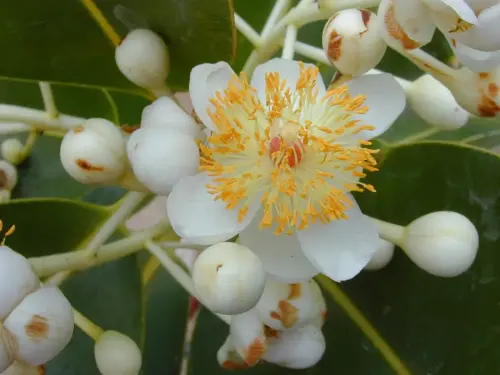
Tamanu
Calophyllum inophyllum
Tomano flowers adorn Nauru’s coat of arms – the tree once dominated the plateau forest before phosphate mining destroyed it.
-
 2
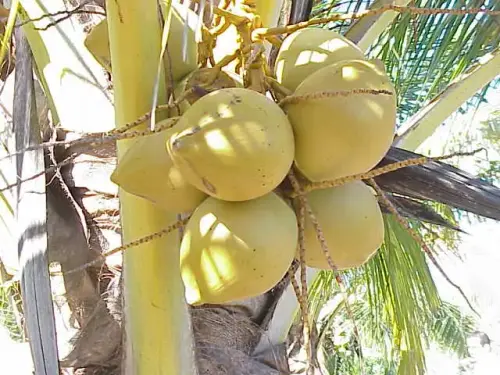
Coconut palm
Cocos nucifera
Coconut palms fringe the entire coast of Nauru – before the phosphate era, coconuts and fish were the islanders’ mainstay.
-
 3
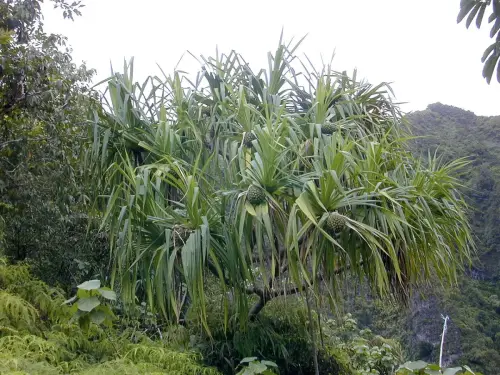
Thatch screwpine
Pandanus tectorius
Pandanus fed Nauruans through long droughts – its fruit can be eaten raw, cooked, or dried and stored.
-
 4
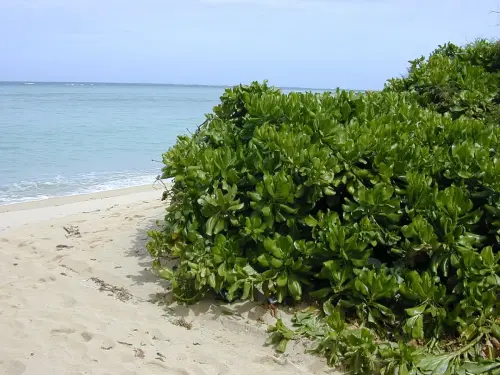
Beach naupaka
Scaevola taccada
A shrub with “half” flowers, as if someone had cut off half their petals – a green barrier protecting Nauru’s beaches from erosion.
-
 5
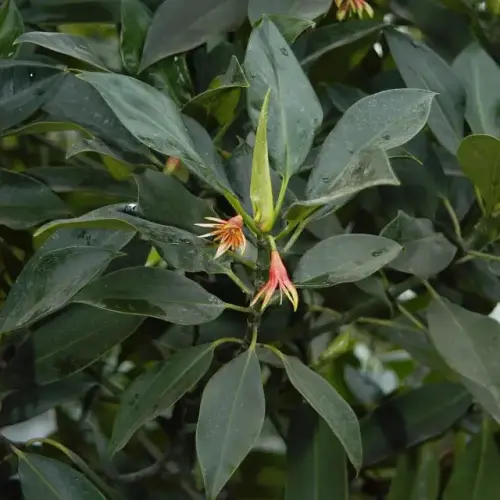
Oriental mangrove
Bruguiera gymnorhiza
Nauru’s only mangroves grow in the brackish ponds of Ijuw and Anabar – a habitat for birds and fish that is rare on the island.
Nauru on other Ominuvo maps
- World in NumbersPopulation: 12,025 (2025)Source: World Bank – WDI: UN World Population Prospects (CC BY 4.0)
- Languages of the worldEnglish, Nauru · official languagesSource: Unicode CLDR (Unicode License v3)
- Prices around the worldAustralian dollar (AUD)Source: ISO 4217
- Time zones mapUTC+12Source: IANA tz database (public domain)
- Plugs and sockets of the worldType I · 240 V · 50 Hz
- National dishes of the world1 national dish