5 plants worth knowing
Luxembourg
Small as it is, Luxembourg has two clearly different landscapes: in the north lies the Ösling (Éislek) – part of the Ardennes, with deep valleys and oak woods – and in the south the fertile Gutland, with fields, orchards and beech woods. In the east of the country the Moselle valley forms a warm, sunny corridor clad in vineyards. Forests cover more than a third of the country.
Hover over a plant to see on the map where it grows.
where it grows
-
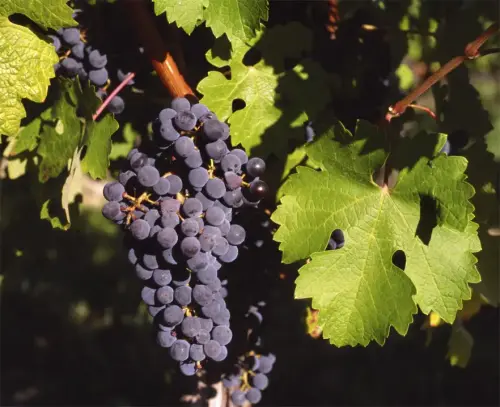 1
Grapevine
Vitis vinifera
Terraced vineyards on the slopes of the Moselle produce Luxembourg’s riesling, auxerrois and sparkling crémant – the small country’s calling card.
-
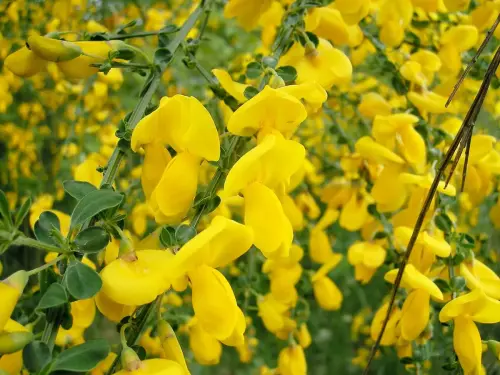 2
Common broom
Cytisus scoparius
In May golden broom cloaks the slopes of the Ösling, and the town of Wiltz celebrates its flowering with a colourful parade.
-
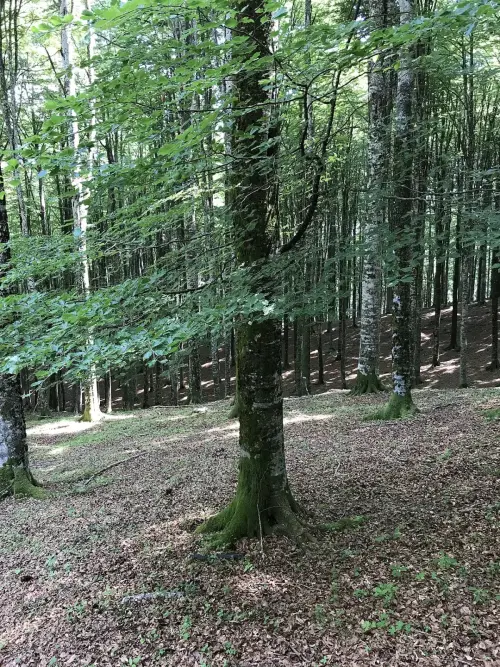 3
European beech
Fagus sylvatica
The beech woods of the Grünewald and the mossy gorges of the Müllerthal – “Luxembourg’s Little Switzerland” – are the country’s loveliest forests.
-
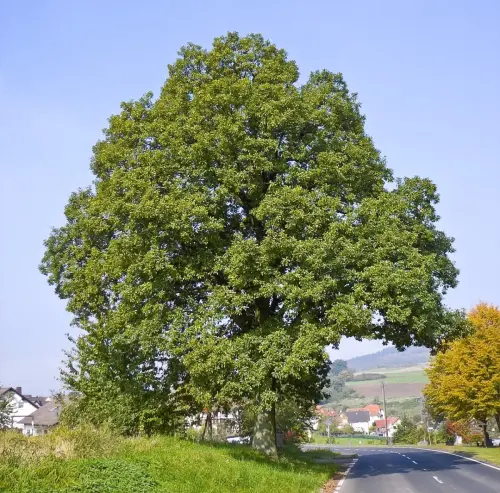 4
Sessile oak
Quercus petraea
For centuries the oak coppices of the Ösling supplied bark to the tanneries – today they are a haven for wildlife in the valleys of the Ardennes.
-
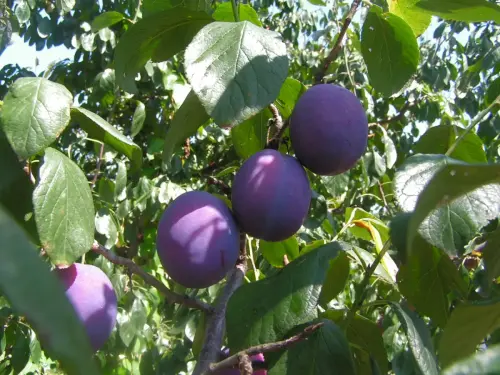 5
Plum
Prunus domestica
September in Luxembourg smells of Quetschentaart – a tart made with quetsch plums from garden orchards.
Luxembourg on other Ominuvo maps
- World in NumbersPopulation: 686,970 (2025)Source: World Bank – WDI: UN World Population Prospects (CC BY 4.0)
- Languages of the worldFrench, Luxembourgish, German · official languagesSource: Unicode CLDR (Unicode License v3)
- Prices around the worldEuro (EUR)Source: ISO 4217
- Time zones mapUTC+1 / UTC+2 in summerSource: IANA tz database (public domain)
- Plugs and sockets of the worldType C, F · 230 V · 50 Hz
- National dishes of the world2 national dishes
- Castles map42 castles and palacesSource: Wikidata (CC0 1.0)
- VPN provider mapServers of 27 VPN providersSource: VPN Map (Ominuvo) (CC BY 4.0)