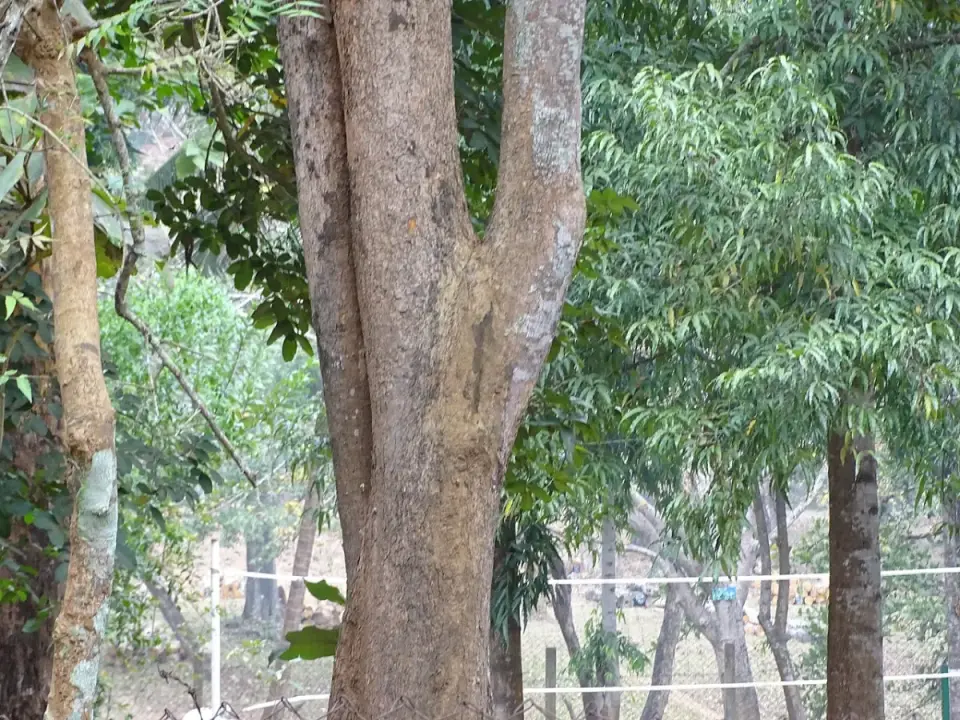
Liberia · #5 tree
Azobé
Lophira alata · locally: ekki (ang.)
A forest giant with wood so heavy it sinks in water – used to build harbours and locks all over the world.
Lophira alata is one of the tallest trees of the West African rainforest – it reaches 50–60 m, and its straight trunk can be more than 1.5 m in diameter. The young leaves are bright red, the flowers white and fragrant, and the fruits winged. The dark reddish-brown wood is among the hardest and heaviest in the world; it resists water, fungi and shipworms, so it is used to build quays, bridges and railway sleepers. The species is classified as vulnerable.
Significance in the country
Liberia has kept the largest tracts of Upper Guinean forest, and azobé is one of their most characteristic trees and an important raw material for the local timber industry. Huge specimens survive in Sapo National Park, among other places.
Where it grows
In rainforests throughout the country, best preserved in the south-east (Sinoe, Grand Gedeh and River Gee counties) and in the Gola and Lofa forests in the north-west.
More: Wikipedia (en)