Kazakhstan · #9 tree
Silver birch
Betula pendula · locally: kajyń (қайың)
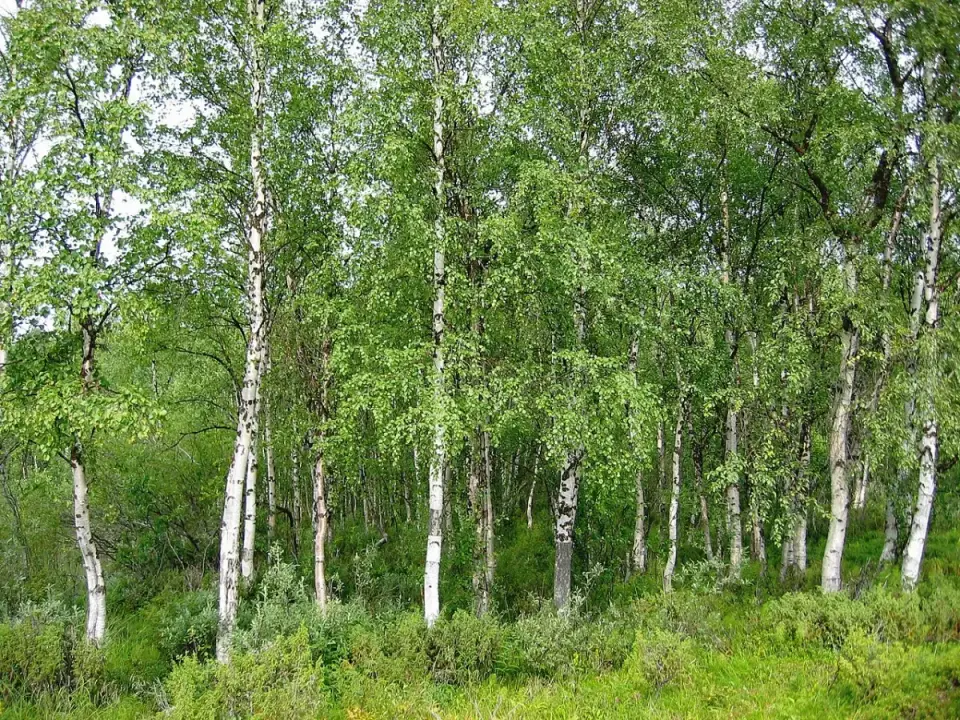
In northern Kazakhstan the steppe is dotted with birch copses called kolki – here white birch trunks mark the edge of the forest-steppe.
A deciduous tree growing to 20–30 m, with a slender trunk and white bark that becomes cracked and black at the base on older trees. Its thin, drooping twigs are covered in resinous warts, and its triangular, double-toothed leaves turn yellow in autumn. It flowers in spring with catkins, and its tiny winged fruits are dispersed by the wind. It is a pioneer species, resistant to frost and poor soils, that quickly colonises burnt ground and abandoned fields; its wood is used for fuel and joinery.
Significance in the country
Birch and aspen–birch copses are the most common woodlands of northern Kazakhstan – they break up the farmed steppe and shelter fields from the wind. Birch is also often planted in northern cities, including Astana.
Where it grows
Grows in the forest-steppe and pinewoods of northern Kazakhstan – in the North Kazakhstan, Kostanay, Akmola and Pavlodar regions – and in the mountains and valleys of eastern Kazakhstan (the Altai).
More: Wikipedia (en) Wikipedia (pl)