Italy · #7 crop
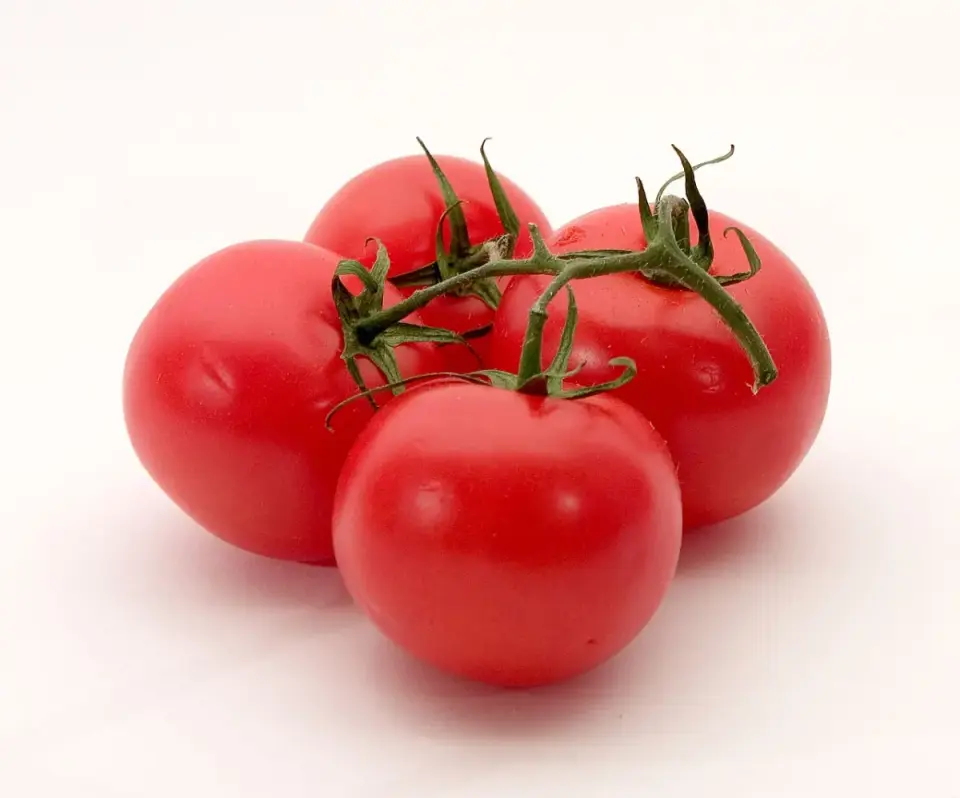
Tomato
Solanum lycopersicum · locally: pomodoro
Though it came from the Americas, the tomato became the heart of Italian cooking – from pizza Margherita to San Marzano tomato sauce.
The tomato is a plant of the nightshade family, grown as an annual, with sprawling or staked stems reaching 1–3 m. The stems and pinnate leaves are covered in glandular hairs with a characteristic pungent smell. Small yellow flowers produce juicy berries – red, yellow, orange or even purple – rich in vitamin C, potassium and lycopene. The species comes from western South America and was domesticated in Mexico; its green parts are poisonous because they contain tomatine.
Significance in the country
Tomatoes reached Italy in the 16th century and were long regarded as an ornamental – their name “pomodoro”, or “golden apple”, refers to the first, yellow varieties. Today Italy is one of the world’s largest producers of processed tomatoes, and San Marzano tomatoes from the foot of Vesuvius and Pachino tomatoes from Sicily have protected designations of origin.
Where it grows
Tomatoes for processing are grown mainly on the Po Valley plain (Piacenza, Parma, Ferrara, Cremona) and in Apulia around Foggia; famous varieties come from Campania (San Marzano) and Sicily (Pachino in the province of Syracuse, and the greenhouses around Ragusa).
More: Wikipedia (en) Wikipedia (pl)