Indonesia · #9 crop
Durian
Durio zibethinus · locally: durian
The spiky “king of fruits” comes from the forests of Sumatra and Borneo – some adore its creamy flesh, others flee from its smell.
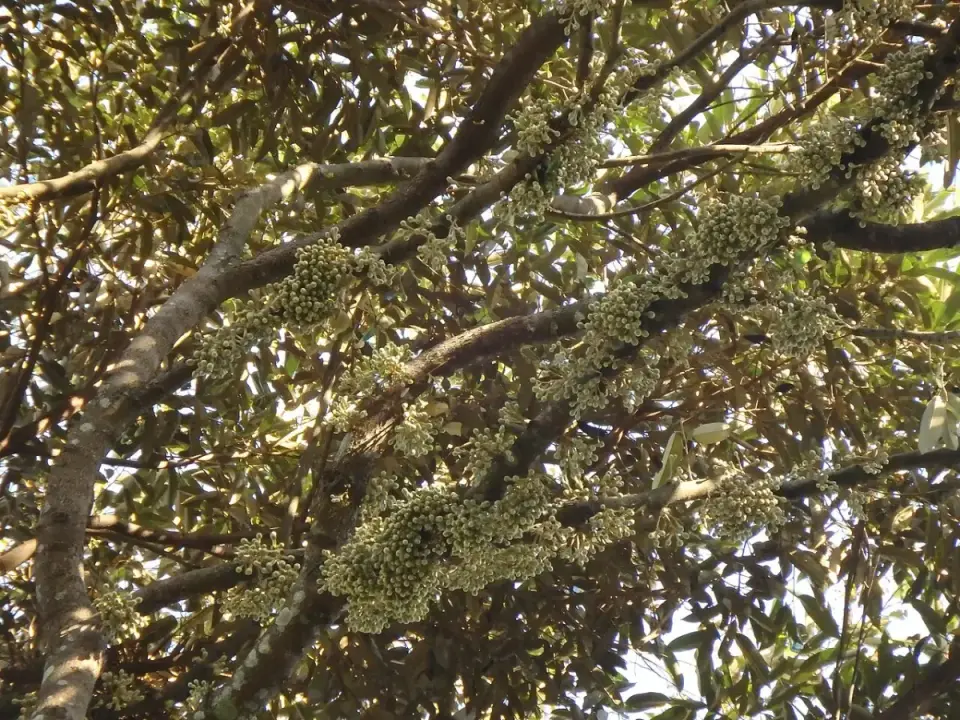
The durian is a tall evergreen tree of the mallow family, growing to 25–50 m, with a straight trunk and leaves that are silvery underneath. Its creamy-white flowers grow in clusters straight from the branches, open at night and are pollinated mainly by bats. The fruits, usually weighing 1–3 kg, are covered in a thick husk bristling with hard, sharp spines; inside are chambers holding large seeds wrapped in creamy, sweet flesh. Its taste is likened to almond custard with a hint of onion, and its smell is so intense that it is banned from many hotels and public transport.
Significance in the country
Indonesia is one of the largest durian producers, and in many towns on Sumatra, Borneo and Java the durian season is a real festival of street stalls. The flesh is used to make, among other things, the famous pancakes of Medan and lempok sweets, and fermented flesh becomes tempoyak, a condiment popular on Sumatra.
Where it grows
Wild in the rainforests of Sumatra and Borneo; cultivated throughout the western and central parts of the archipelago – especially on Sumatra (including North and West Sumatra), in Indonesian Borneo, and on Java, Bali and Sulawesi.
More: Wikipedia (en) Wikipedia (pl)