Hungary · #6 crop
Apricot
Prunus armeniaca · locally: kajszibarack
Apricots from around Kecskemét and Gönc are the raw material for Hungary’s most famous pálinka – barackpálinka.
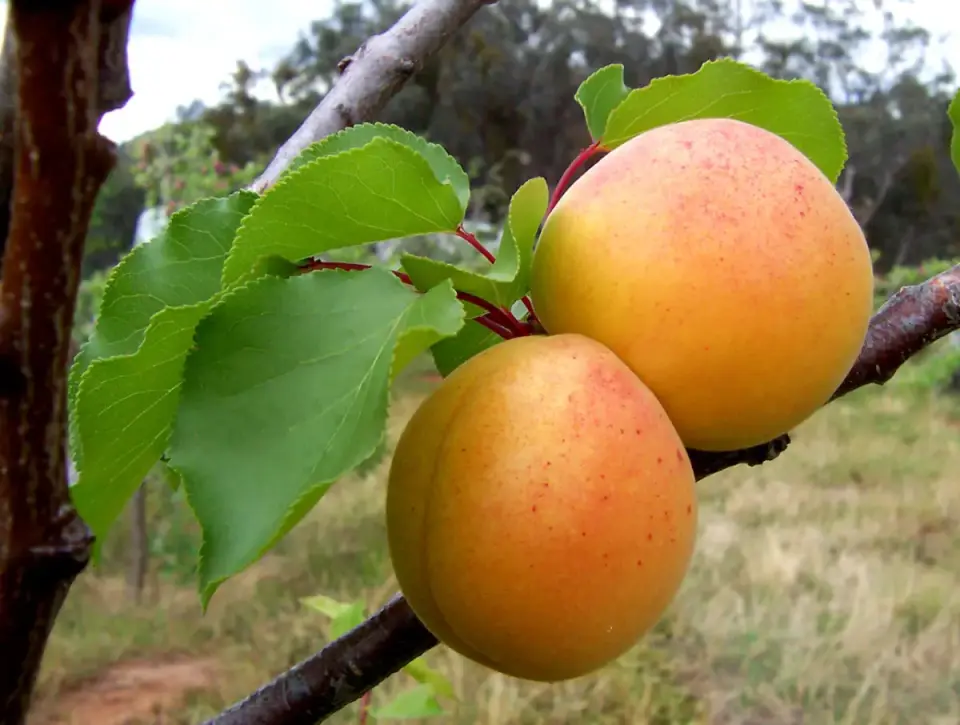
The apricot is a small tree of the rose family, growing to 8–12 m, with heart-shaped, glossy leaves on reddish stalks. It flowers very early – in March or April, before the leaves unfold – with white or pale pink blossoms, so it often loses its young fruit to frost. The fruit is a velvety, orange-yellow drupe with sweet, aromatic flesh rich in beta-carotene. It comes from Central Asia and China, and its Latin name refers to Armenia, through which the apricot is said to have reached Europe.
Significance in the country
The Hungarian name “kajszi” comes from Turkish, and apricots have been grown here for centuries. Kecskeméti barackpálinka and Gönci barackpálinka have protected designations of origin, and apricot jam is a favourite filling for pancakes (palacsinta) and cakes.
Where it grows
The main apricot orchards lie on the sandy soils of the Danube–Tisza Interfluve around Kecskemét (Bács-Kiskun County and the south of Pest County) and around Gönc in Borsod-Abaúj-Zemplén County.
More: Wikipedia (en) Wikipedia (pl)