Estonia · #3 shrub
Common juniper
Juniperus communis · locally: kadakas
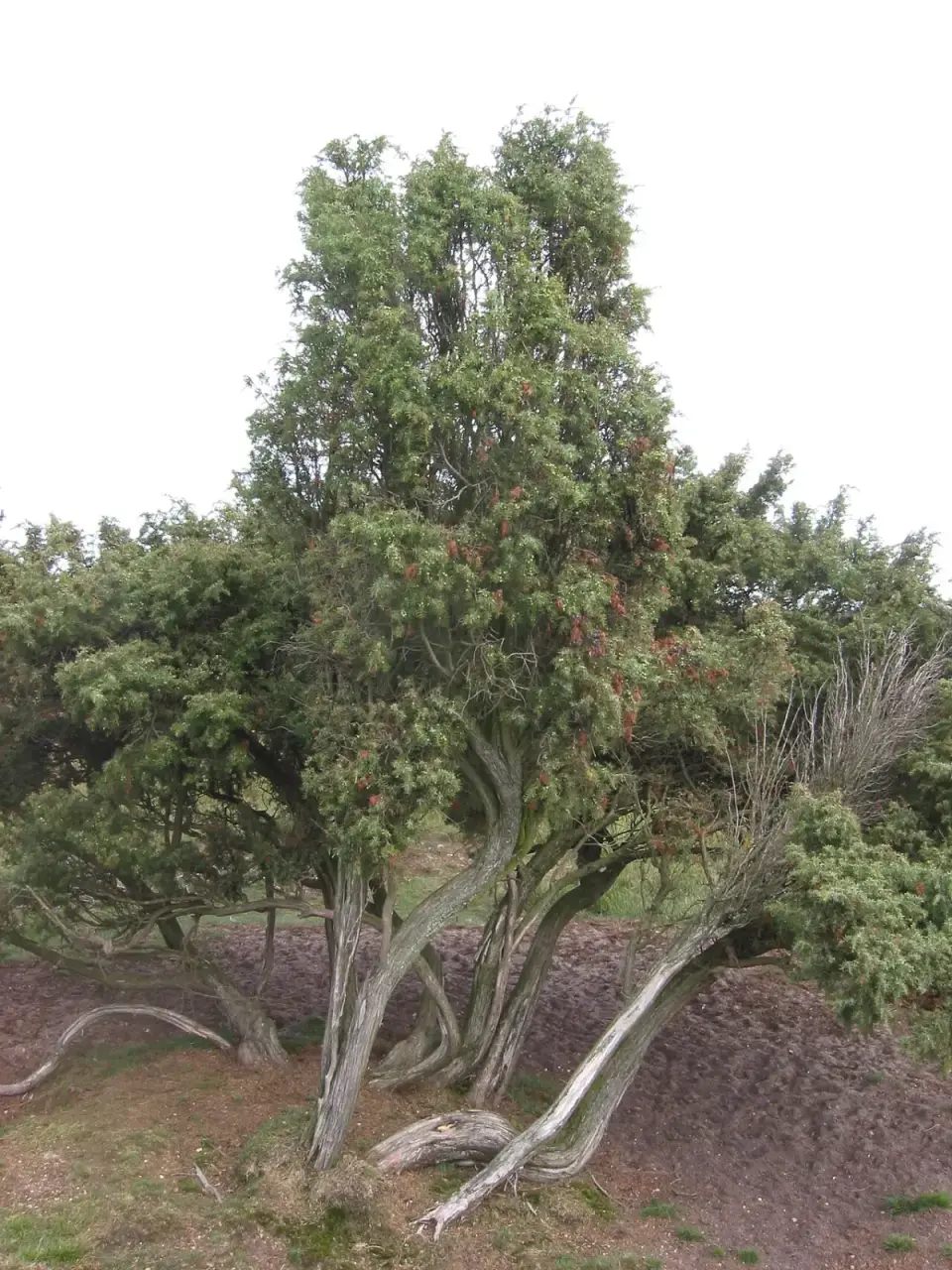
Columnar junipers dotting the limestone pastures of Saaremaa are a symbol of the Estonian islands – their wood is made into well-loved souvenirs.
The common juniper is an evergreen shrub or small tree with prickly, needle-like leaves arranged in whorls of three. Its blue-black, bloomy “berries” are in fact fleshy cones that take two to three years to ripen. It grows on poor sandy or limestone soils, on heathland, in open pinewoods and on pastures, where cattle avoid it because of its prickly needles. The berries are used as a spice for game and cabbage and give gin its characteristic flavour, while the fragrant wood does not rot and does not absorb smells.
Significance in the country
The juniper alvars of Saaremaa, Muhu and Hiiumaa are among Estonia’s most distinctive landscapes. The hard juniper wood is made into mugs, spoons and chopping boards sold as souvenirs, and juniper twigs are used to smoke fish and to flavour the islands’ traditional home-brewed beer.
Where it grows
Most abundant on the alvars and pastures of the western islands (Saaremaa, Muhu, Hiiumaa), in Läänemaa and on the limestone plateau of northern Estonia (Harjumaa, Lääne-Virumaa, Raplamaa, Järvamaa); scattered in pine forests across the country.
More: Wikipedia (en) Wikipedia (pl)