5 plants worth knowing
Equatorial Guinea
Equatorial Guinea consists of mainland Río Muni, covered in dense equatorial forest and home to Monte Alén National Park, and the volcanic islands of Bioko, crowned by Pico Basilé, and remote Annobón. The climate is hot and very humid all year round, and the southern slopes of Bioko receive more than 10,000 mm of rain a year – one of the wettest places in Africa.
Hover over a plant to see on the map where it grows.
where it grows
-
 1
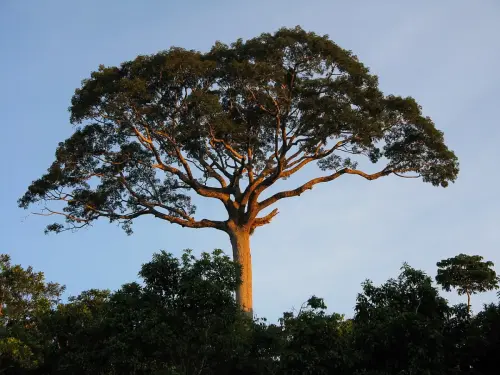
Kapok tree
Ceiba pentandra
The mighty ceiba is the “God tree” on the coat of arms and flag of Equatorial Guinea – a symbol of the nation’s unity.
-
 2
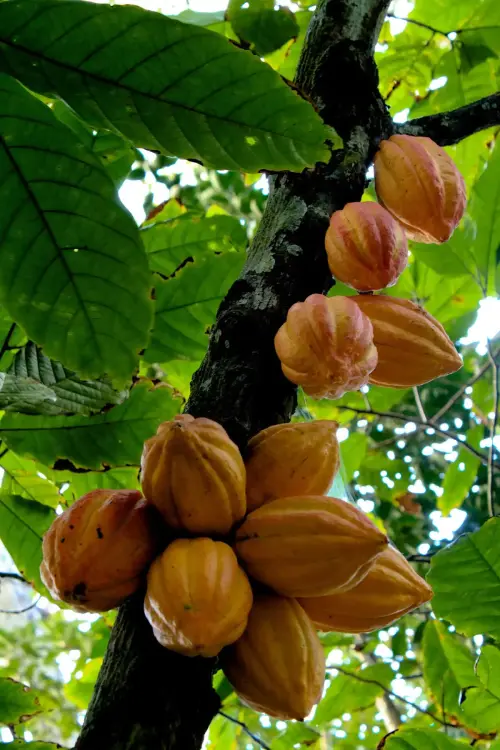
Cacao
Theobroma cacao
Before the oil era, Bioko was famous for its cocoa – its beans were among the finest in the world.
-
 3
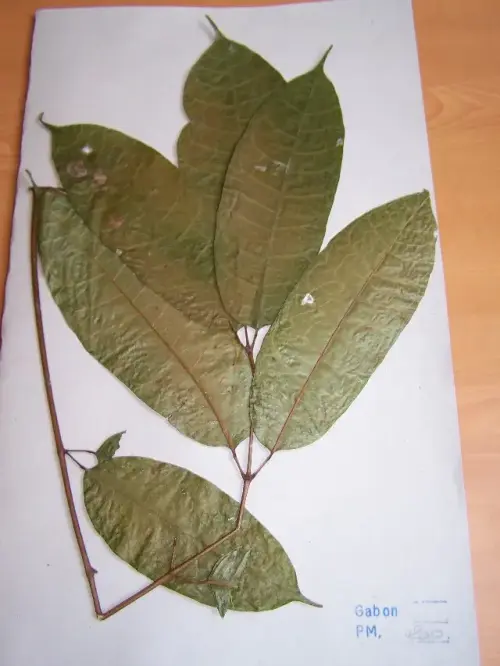
Okoumé
Aucoumea klaineana
For decades this tree was Río Muni’s main export – its wood is made into plywood for the whole world.
-
 4
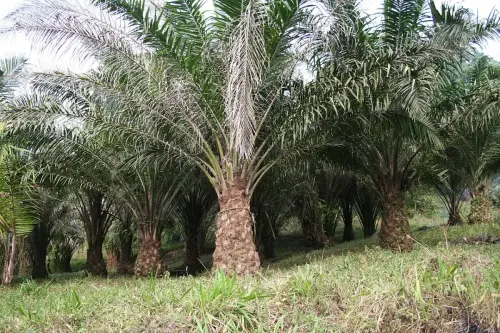
African oil palm
Elaeis guineensis
The palm that provides cooking oil and palm wine – in the villages of Bioko and Río Muni it grows beside practically every house.
-
 5
Azobé
Lophira alata
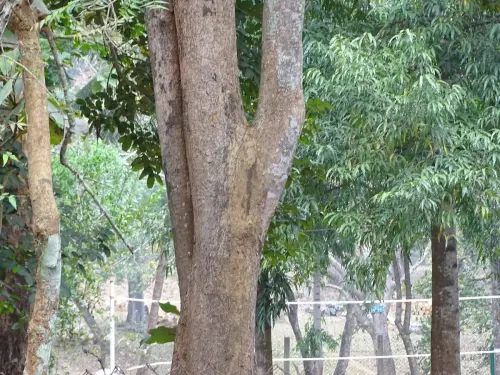
The “ironwood” of Río Muni’s forests – its timber is so heavy and hard that it sinks in water and resists termites.
Equatorial Guinea on other Ominuvo maps
- World in NumbersPopulation: 1.9 million (2025)Source: World Bank – WDI: UN World Population Prospects (CC BY 4.0)
- Languages of the worldSpanish, French, Portuguese · official languagesSource: Unicode CLDR (Unicode License v3)
- Prices around the worldCentral African CFA franc (XAF)Source: ISO 4217
- Time zones mapUTC+1Source: IANA tz database (public domain)
- Plugs and sockets of the worldType C, E · 220 V · 50 Hz
- National dishes of the world1 national dish
- Volcano & earthquake map1 volcanoSource: Smithsonian GVP (Smithsonian Terms of Use)