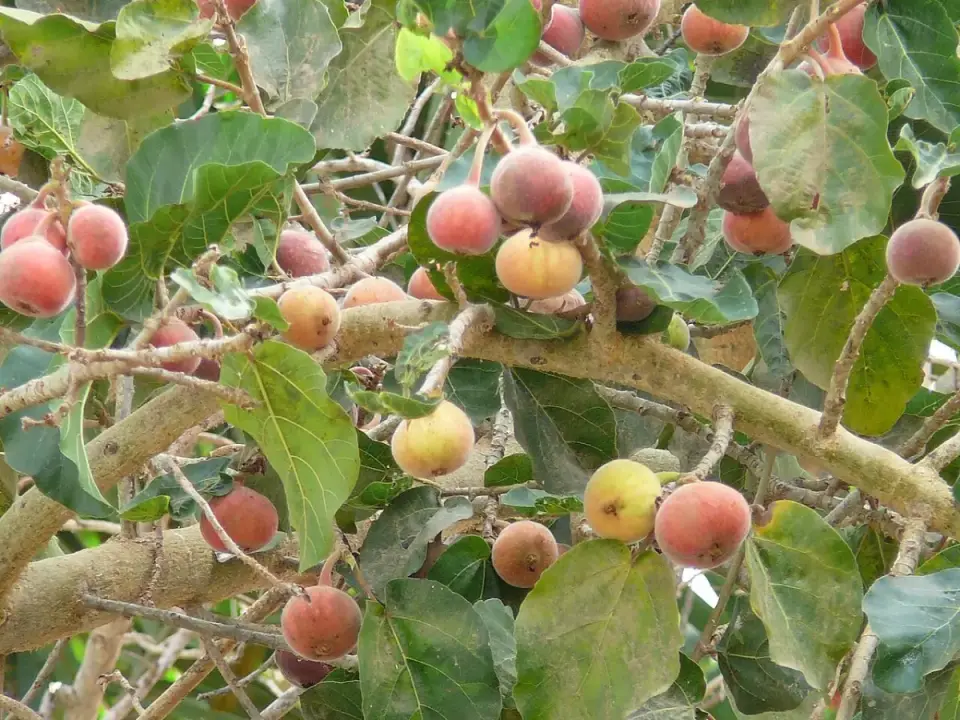
Egypt · #8 tree
Sycamore fig
Ficus sycomorus · locally: dżummajz (جميز)
The sycamore fig was the sacred tree of the goddess Hathor – its durable wood was carved into coffins and statues in the age of the pharaohs.
A spreading tree of the mulberry family growing to about 20 m, with a thick trunk, a broad crown and rough, heart-shaped leaves. Its small edible figs grow in dense clusters directly on the trunk and thick limbs. It needs the wasp Ceratosolen arabicus for pollination, which is absent from Egypt – so since ancient times the young fruits have been nicked to make them ripen without pollination. It grows wild in Africa and on the Arabian Peninsula, and its wood is light but highly resistant to rot.
Significance in the country
The Egyptians associated the sycamore fig with the goddesses Hathor – known as the “Lady of the Sycamore” – Nut and Isis, who were believed to emerge from its crown to give the dead water and food. Its wood was used for coffins and statues, and according to Coptic tradition the Holy Family rested beneath a sycamore fig in the Cairo district of Matariya during the flight into Egypt.
Where it grows
Planted for thousands of years along canals and roads and near villages throughout the Nile Valley and Delta, from the Delta to Aswan; the famous old “Virgin Mary’s Tree” grows in Matariya in Cairo.
More: Wikipedia (en) Wikipedia (pl)