Djibouti · #5 shrub
Toothbrush tree
Salvadora persica · locally: caday (somalijski), miswak
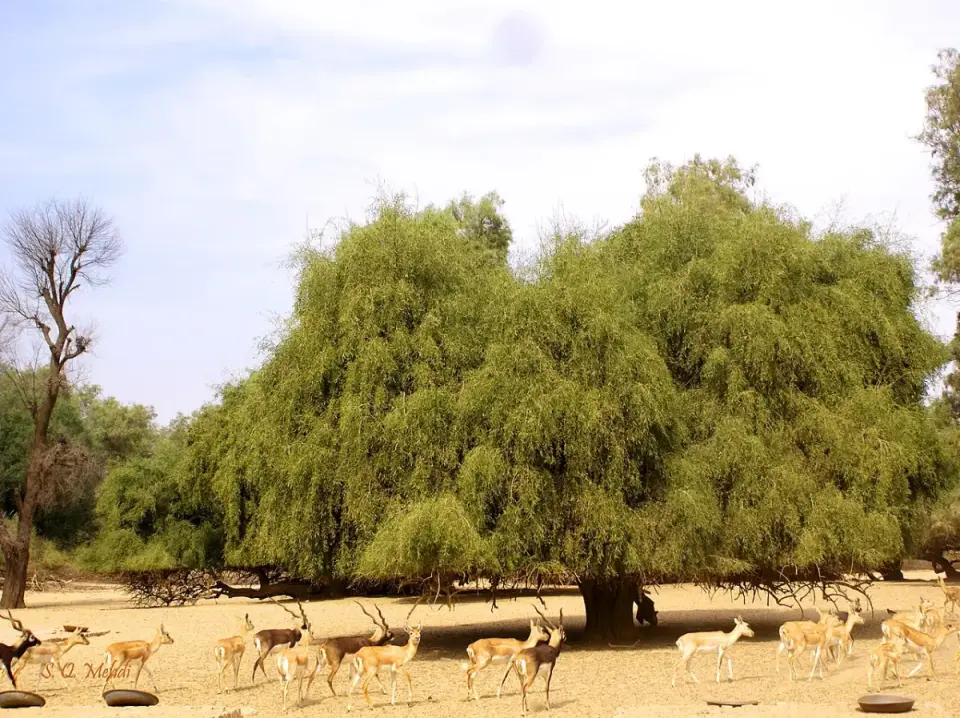
A shrub whose twigs have served as a natural toothbrush for centuries – in Djibouti people chew them every day.
An evergreen shrub or small tree reaching 3–6 m, with drooping branches, fleshy, pale green leaves and small, reddish, peppery-tasting fruits. It grows on dry, often saline land from West Africa across the Arabian Peninsula to India. Its twigs and roots contain antibacterial compounds, fluoride and silica, so when chewed at one end they serve as a toothbrush (miswak), which is also recommended in Islamic tradition.
Significance in the country
In Djibouti and throughout the Horn of Africa, miswak sticks are sold at markets and kept in the mouth for half the day; the shrub also provides shade and fodder for camels on the coastal plains.
Where it grows
On coastal plains and in dry valleys throughout the country, especially on saline soils around the Gulf of Tadjoura and on the northern coast.
More: Wikipedia (en)