Cuba · #7 crop
Arabica coffee
Coffea arabica · locally: café
The coffee plantations of the Sierra Maestra were founded by French refugees from Haiti – today their ruins are on the UNESCO list.
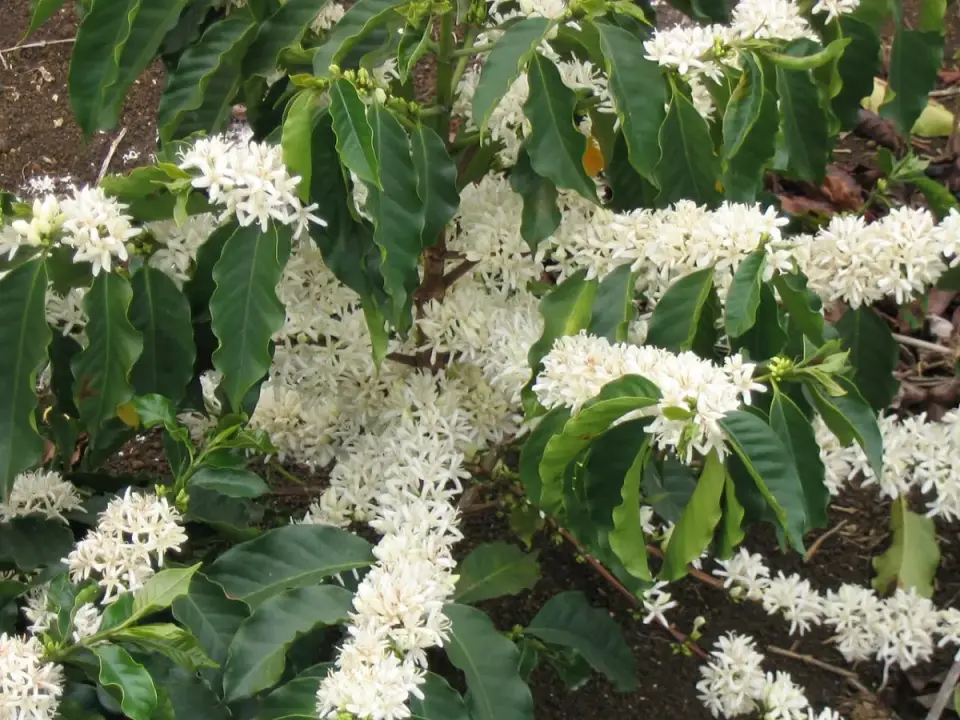
An evergreen shrub or small tree of the madder family, growing to 2–4 m in cultivation, with glossy, dark green leaves and white, jasmine-scented flowers. The fruits take several months to ripen, turning from green to red; each usually contains two seeds – the coffee beans. Arabica coffee comes from the highlands of Ethiopia and does best in the mountains, in the dappled shade of trees, where the fruits ripen more slowly and develop a richer aroma.
Significance in the country
Coffee was brought to Cuba in 1748, but cultivation truly flourished after 1791, when French planters fleeing the revolution in Haiti set up hundreds of cafetales in the eastern mountains. Their remains form the UNESCO site “Archaeological Landscape of the First Coffee Plantations in the South-East of Cuba”, and strong, sweetened café cubano is a daily ritual for the island’s inhabitants.
Where it grows
Mainly the mountains of eastern Cuba – the Sierra Maestra (Santiago de Cuba, Granma) and the Nipe-Sagua-Baracoa massif (Guantánamo, Holguín) – as well as the Escambray Mountains in the centre of the country and the Sierra del Rosario in the west.
More: Wikipedia (en) Wikipedia (pl)