Chad · #5 crop
Upland cotton
Gossypium hirsutum · locally: qutun (قطن)
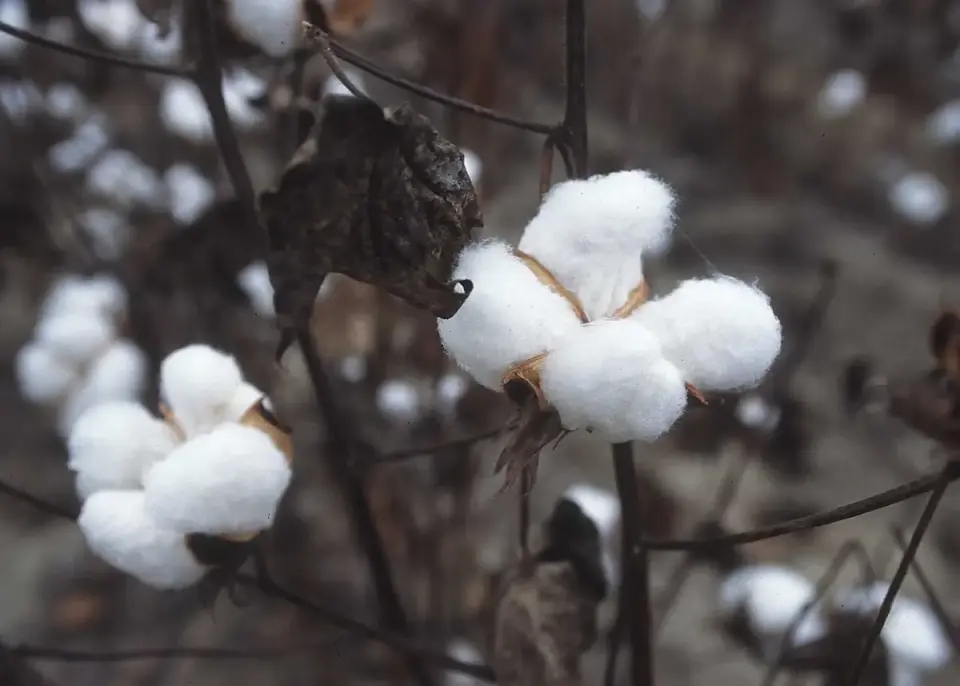
The “white gold” of southern Chad – for decades cotton was the main source of income for farmers in the Logone region.
A shrubby plant of the mallow family, grown as an annual, 1–1.5 m tall, with lobed leaves and large flowers that are cream on the first day and turn pink the next. The fruit is a capsule that splits into several sections, revealing seeds covered in white down – cotton fibre. The species comes from Central America and is today the most widely grown cotton, providing about 90% of world production. Oil is pressed from the seeds, and the press cake is used as animal feed.
Significance in the country
The French introduced cotton growing to Chad in the 1920s, and until oil production began it was the country’s most important export. It is grown mainly by smallholders in the south, and the fibre is processed in mills in Moundou.
Where it grows
In the wetter south of the country – in Logone Occidental and Logone Oriental, Mandoul, Tandjilé, both Mayo-Kebbi regions and Moyen-Chari.
More: Wikipedia (en) Wikipedia (pl)