10 plants worth knowing
Bolivia
Bolivia stretches from the high, cold Altiplano with Lake Titicaca and the Uyuni salt flat, through the cloud-forested valleys of the Yungas, to the hot lowlands of the east: the savannas of Beni, the Amazonian forests of Pando, the dry forests of the Chiquitanía and the thorny Gran Chaco. The country’s constitution recognises no fewer than two flowers as national symbols – the kantuta and the patujú.
Hover over a plant to see on the map where it grows.
where it grows
-
 1
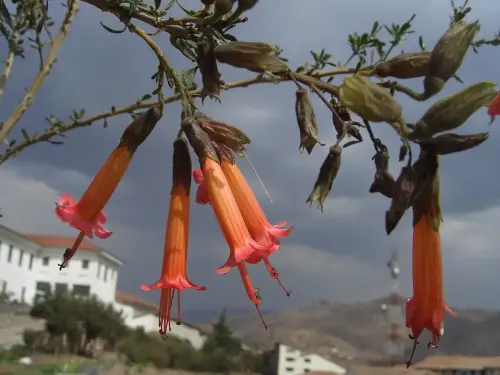
Cantuta
Cantua buxifolia
A flower in the colours of the Bolivian flag – red, yellow and green kantutas have been a national symbol since 1924.
-
 2
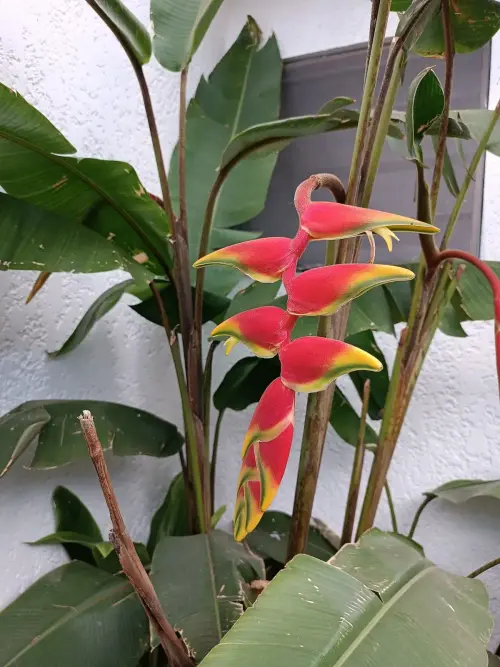
Hanging lobster claw
Heliconia rostrata
Hanging red-and-yellow flower spikes edged in green look like lobster claws – the patujú is Bolivia’s second national flower.
-
 3
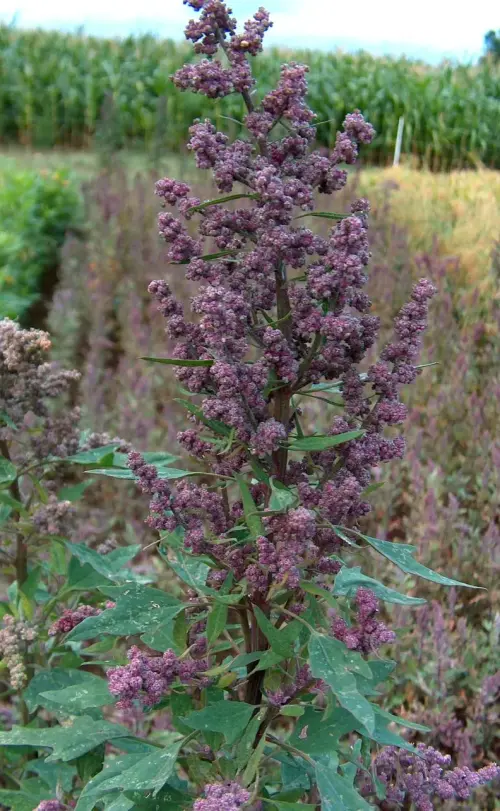
Quinoa
Chenopodium quinoa
The gold of the Andes – the largest and most famous quinoa grains, known as Quinua Real, grow around the edges of the Uyuni salt flat.
-
 4
Coca
Erythroxylum coca
The sacred leaf of the Andes – chewing coca helps people cope with altitude and fatigue, and Bolivia’s constitution protects it as cultural heritage.
-
 5
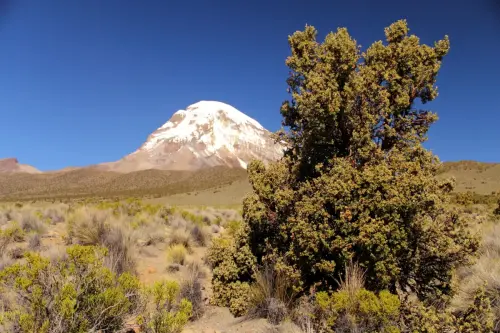
Polylepis tarapacana
Polylepis tarapacana
The world’s highest-growing tree – on the slopes of Sajama volcano the keñua forms groves at up to 5,200 m.
-
 6
Potato
Solanum tuberosum
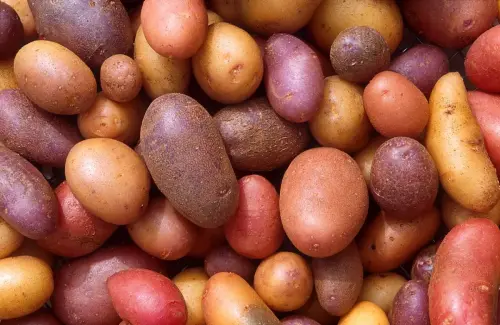
The Bolivian Altiplano lies in the cradle of the potato – hundreds of varieties and frost-dried chuño are the basis of Andean cuisine.
-
 7
Brazil nut
Bertholletia excelsa
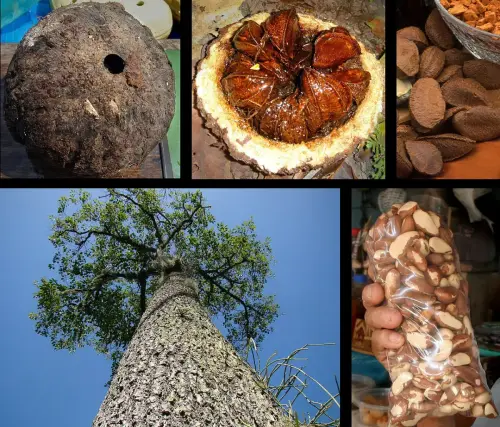
Bolivia is the largest exporter of Brazil nuts – they are gathered in the pristine forests of Pando and northern Beni.
-
 8
Floss silk tree
Ceiba speciosa
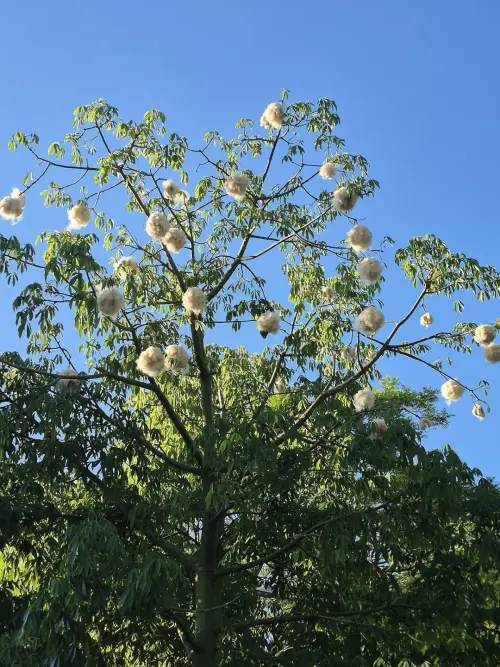
The pot-bellied toborochi is the legendary tree of Santa Cruz – according to folklore, Princess Araverá hid inside its trunk.
-
 9
Yareta
Azorella compacta
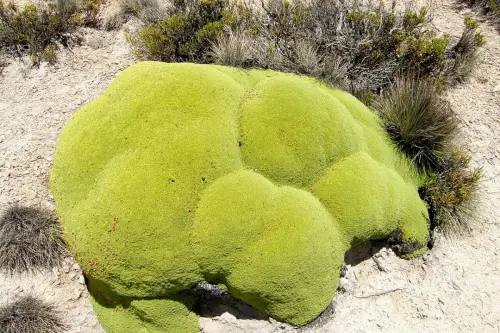
Hard green yareta cushions on the rocks of the Altiplano grow about 1.5 cm a year, and the oldest may be thousands of years old.
-
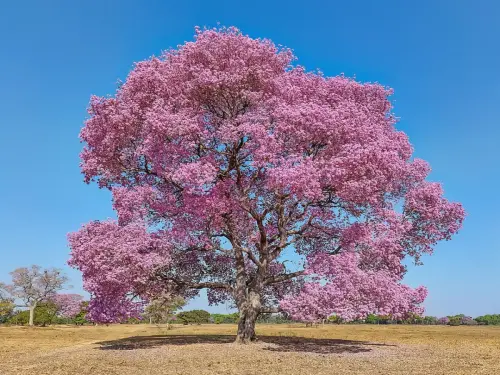 10
Pink lapacho
Handroanthus impetiginosus
At the end of the dry season the pink crowns of the tajibo light up the streets of Santa Cruz and the forests of the Bolivian lowlands.
Bolivia on other Ominuvo maps
- World in NumbersPopulation: 12.6 million (2025)Source: World Bank – WDI: UN World Population Prospects (CC BY 4.0)
- Languages of the worldSpanish, Quechua, Aymara · official languagesSource: Unicode CLDR (Unicode License v3)
- Prices around the worldBolivian boliviano (BOB)Source: ISO 4217
- Time zones mapUTC−4Source: IANA tz database (public domain)
- Plugs and sockets of the worldType A, C · 230 V · 50 Hz
- National dishes of the world2 national dishes
- Volcano & earthquake map7 volcanoesSource: Smithsonian GVP (Smithsonian Terms of Use)
- Ghost map2 ghost stories and haunted places
- VPN provider mapServers of 11 VPN providersSource: VPN Map (Ominuvo) (CC BY 4.0)