Belgium · #8 crop
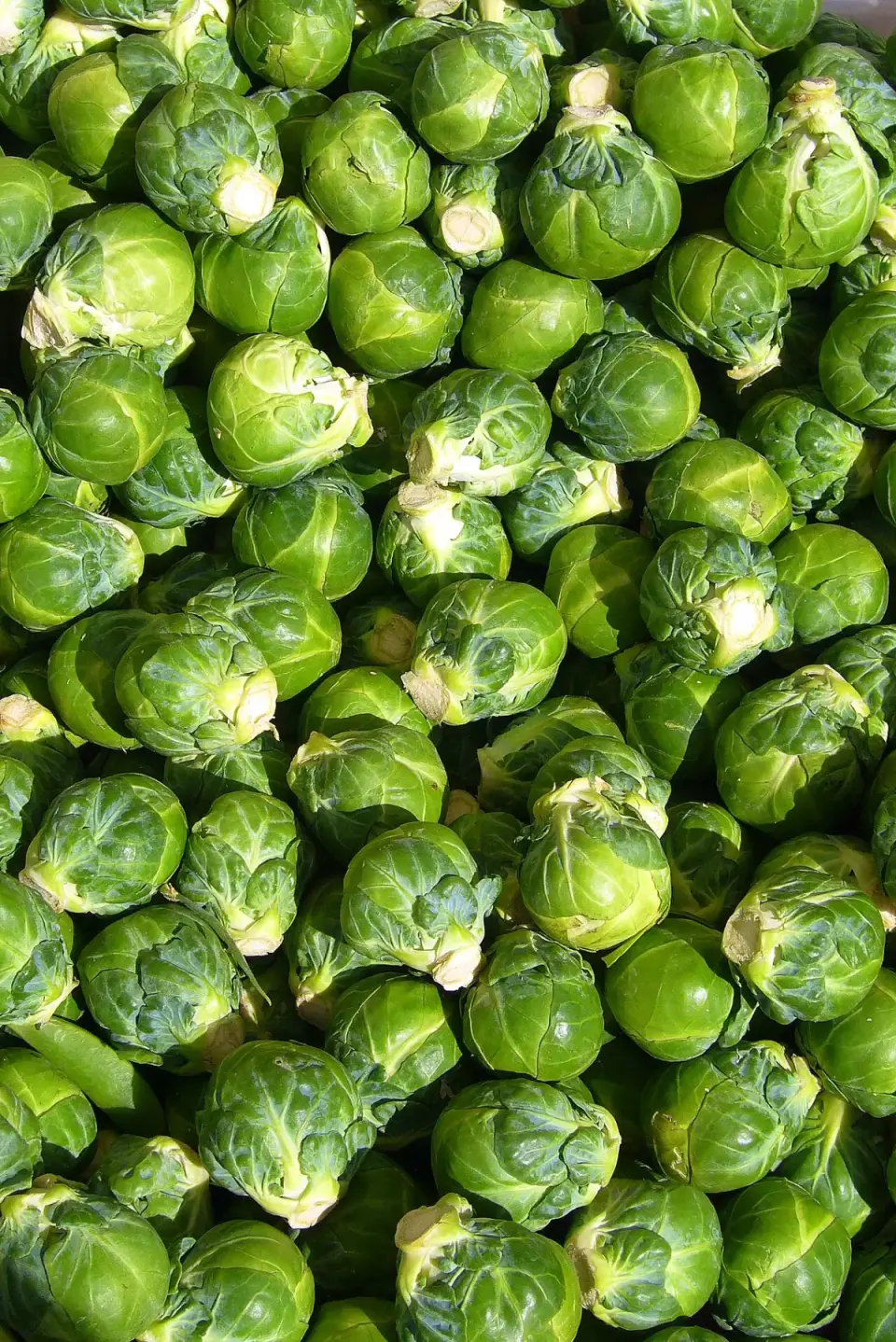
Brussels sprout
Brassica oleracea var. gemmifera · locally: spruitjes / choux de Bruxelles
Brussels sprouts owe their name to the Belgian capital – they may have been grown around Brussels as early as the 13th century.
The Brussels sprout is a biennial variety of cabbage in the cabbage family, grown as an annual vegetable. It forms a tall, unbranched stem up to 1 m high, along which numerous small heads 2–4 cm across grow in the leaf axils – these are side buds made of tightly folded leaves. It tolerates frost well, and light frosts improve its flavour, so it is harvested from autumn into winter. It is rich in vitamin C, folic acid and fibre, and owes its slightly bitter taste to glucosinolates.
Significance in the country
The first written mention of Brussels sprouts dates from 1587, and in the 16th century the vegetable was popular in the Southern Netherlands, from where it spread to the cooler countries of Europe. In many of the world’s languages its name recalls its Belgian origins.
Where it grows
Once grown in the fields around Brussels, today mainly in Flanders – in the provinces of West and East Flanders, Antwerp and Flemish Brabant.
More: Wikipedia (en) Wikipedia (pl)