Argentina · #7 tree
Ombú
Phytolacca dioica · locally: ombú
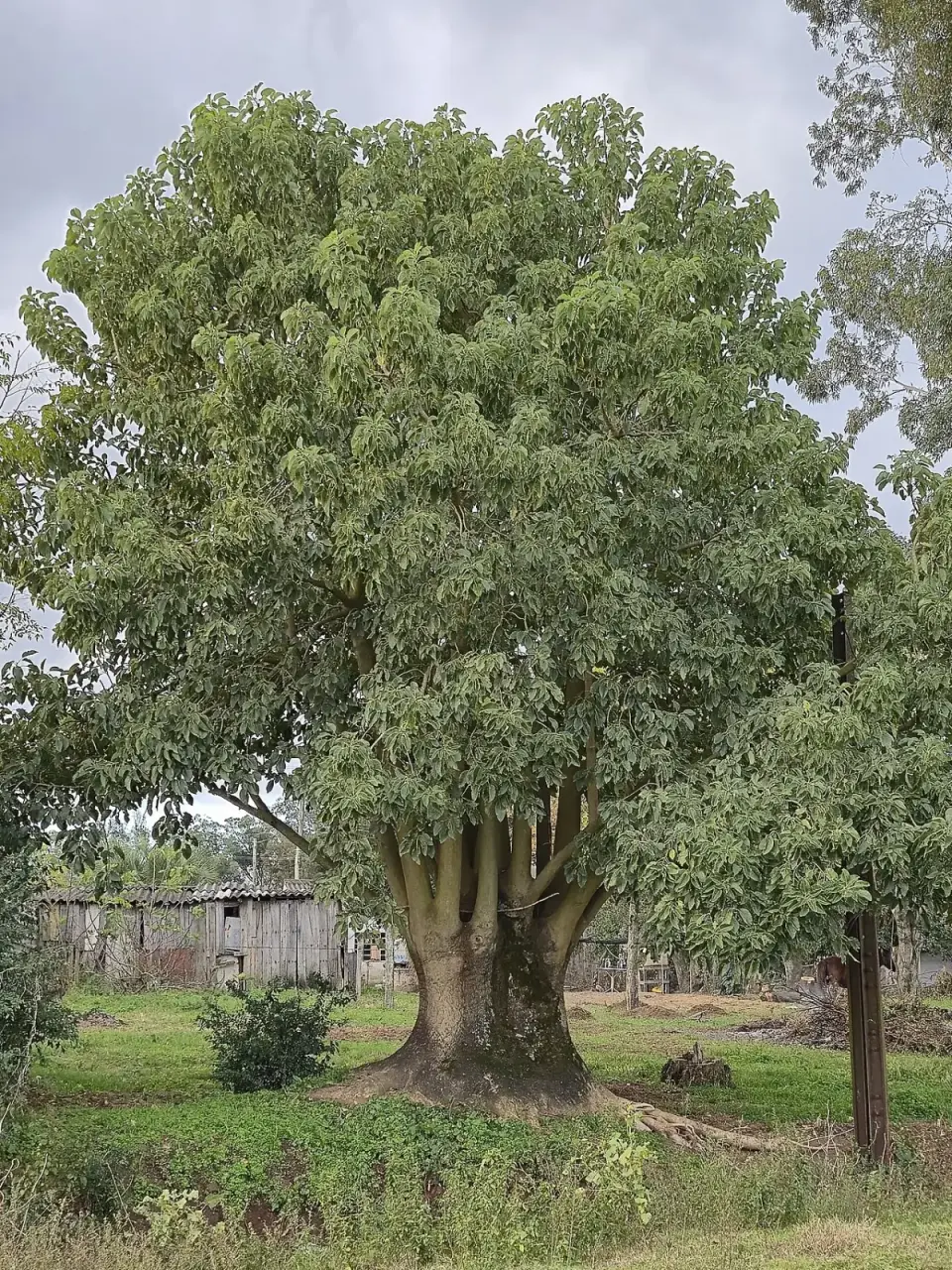
A lone ombú on the endless plain is the classic image of the Argentine pampas, immortalised in poetry and gaucho literature.
The ombú is an evergreen plant of the pokeweed family, growing to 10–18 m, with a massive trunk and a broad, umbrella-shaped crown. Despite its tree-like form, its trunk does not produce true wood – it is soft, spongy and full of water, which lets the plant grow fast and cope well with drought and fire. At the base of the trunk a huge, sprawling swelling develops, from which new shoots can sprout. The leaves and sap are poisonous, so cattle leave them alone. The plants are dioecious – only female individuals bear fruit, in hanging clusters of berries.
Significance in the country
On the treeless pampas the ombú, often planted beside estancias and roadside pulperías, gave shade to people and animals and served travellers as a landmark. It became the literary symbol of the plains – celebrated in Luis L. Domínguez’s poem “El ombú”, with its famous line “La pampa tiene el ombú”, and in William H. Hudson’s story of the same title.
Where it grows
Native to north-eastern Argentina – in Mesopotamia and along the Paraná River; scattered, often very old specimens grow on the pampas of Buenos Aires Province and in the capital’s parks.
More: Wikipedia (en)